
Building in the garden: what the new NPPF means for infill and backland homes
The National Planning Policy Framework published on 17 August 2026 relaxes restrictions on building new homes within existing residential plots, provided certain conditions are met. For landowners and small developers in established neighbourhoods, sites that would once have been dismissed are now worth a second look.
What has changed
Garden development has historically faced a presumption against it in many areas. The new framework takes a more supportive position, reflecting the government’s wider push to make better use of land within existing places.
There are limits. As a general guide, garden development would not usually be permitted if the new footprint is more than double the existing structures on the plot, or if the garden would be reduced to less than half its original size.
What planners will still look at
National policy sets the direction, but individual applications are still judged locally. Planners will consider the character of the area, the relationship with neighbouring homes, privacy and overlooking, daylight and sunlight, access, and the quality of outdoor space left for both the existing and the new home.
This is where design makes or breaks an application. A modest, well-considered building that respects its context will usually fare far better than one that tries to squeeze in as much floorspace as possible.
A case study from Surbiton
Our own work in Surbiton shows what is possible. At Dainton Cottage, a 1906 two-bedroom semi, we worked with a local developer to create a four-bedroom home, using a glazed slot to separate the new extension from the original cottage.
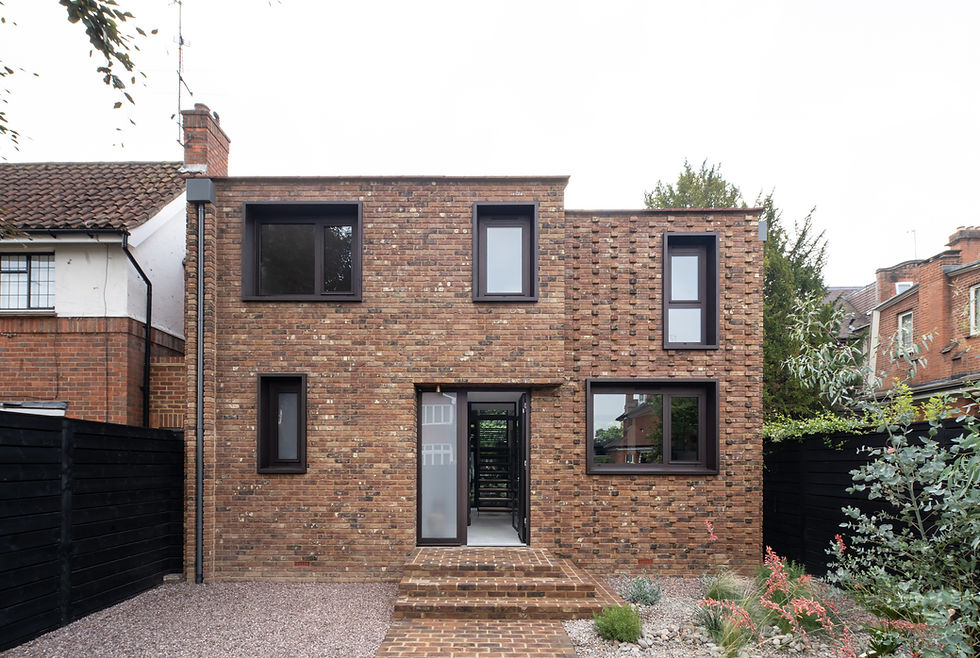
In the garden, we designed WR House: a new family home built from a single contemporary brick, with copper shrouds to the windows referencing the Victorian detailing nearby. It meets national space standards and was delivered on a limited budget within tight planning constraints.
First steps for landowners and developers
Start by understanding the site: its boundaries, access, trees, levels, services and any local planning designations. Then test what might fit, with a focus on how the new home relates to its neighbours.
Early pre-application advice from the council is often worthwhile, particularly on sensitive sites. It helps identify concerns while there is still time to respond.
How we can help
We work with landowners and developers to test the potential of garden and backland plots, from initial feasibility through planning and delivery, with a focus on design quality that maximises value. If you are reassessing a site under the new rules, we would be glad to take a look.
Talk to our directors → wr-ap.com/contactwrap


Comments